How to Prepare a House Construction Budget
Last updated 2026-10-28
These are indicative planning estimates, not a contractor quotation. Actual costs depend on site conditions, design, location, material specifications, labour rates and local approvals.
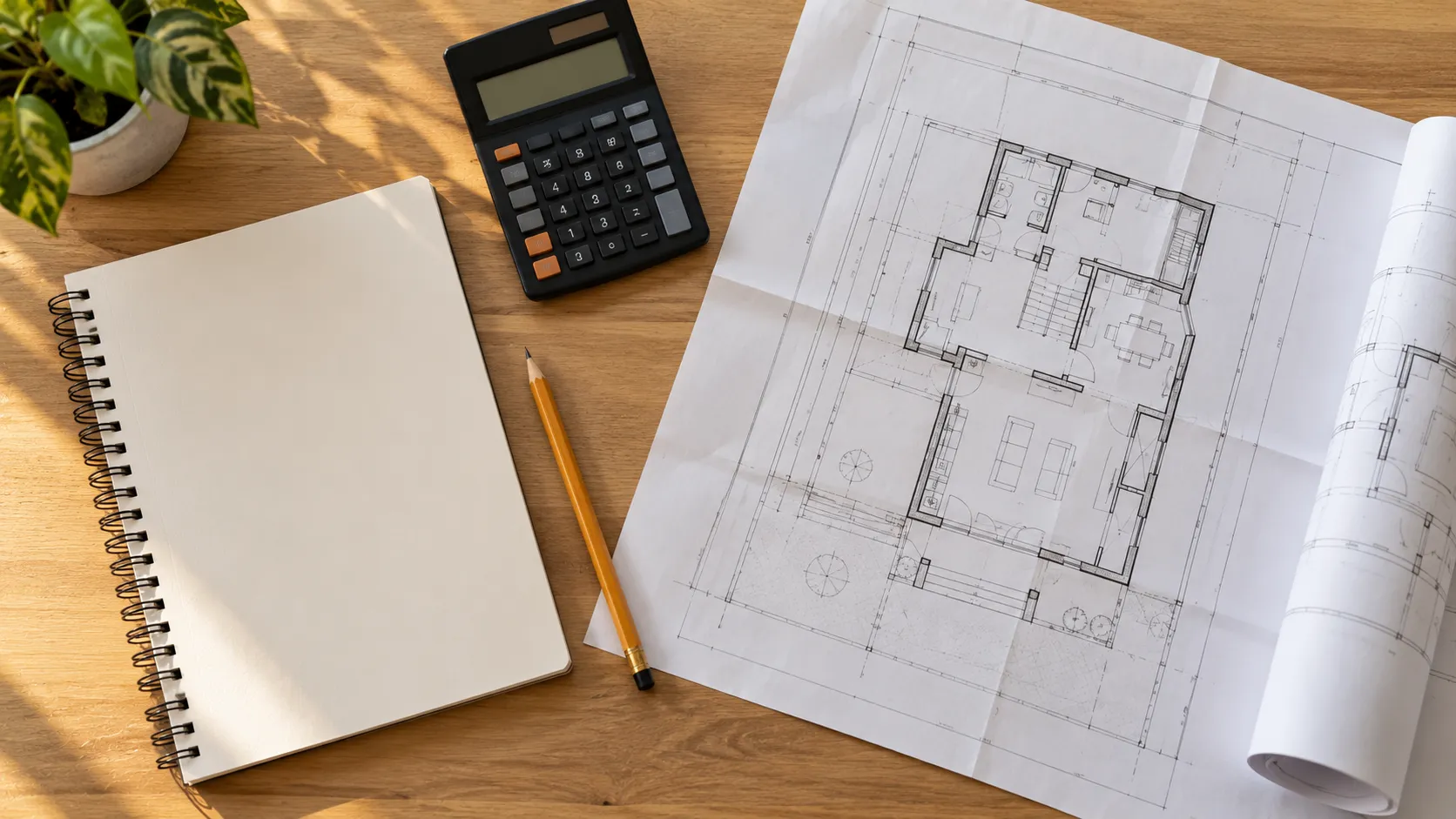
Illustrative 3D visualisation, not an architectural design.
A good budget starts from what you can safely spend, not from what a contractor quotes.
Step 1: Fix your ceiling
Add up savings earmarked for construction, the loan you are eligible for, and any family contribution. Then subtract land and registration costs if they are not already paid. What remains is your construction ceiling. Keep your home loan EMI comfortably within your monthly income; the EMI calculator helps you test this.
Step 2: Decide size and finish
Built-up area and finish quality drive most of the cost. Use the cost calculator to see how a 1,200 sq ft house compares with a 1,500 sq ft one before you commit to a design.
Step 3: Split the budget
Use the budget planner to divide your ceiling into structural work, other materials, labour, finishing, professional fees and contingency. The default split is only a starting point; adjust it once you see real quotations.
Step 4: Keep a contingency
Set aside a reserve for surprises. See contingency explained.
Step 5: Track against it
Record every payment against a category. Pay contractors against completed milestones, not calendar dates, and keep written change orders for any extra work.
A simple checklist
- Written scope and itemised quotation
- Payment tied to milestones
- Contingency held separately
- Approvals and professional fees included
- A line for furniture, curtains and moving in