Construction Budget Contingency Explained
Last updated 2026-10-28
These are indicative planning estimates, not a contractor quotation. Actual costs depend on site conditions, design, location, material specifications, labour rates and local approvals.
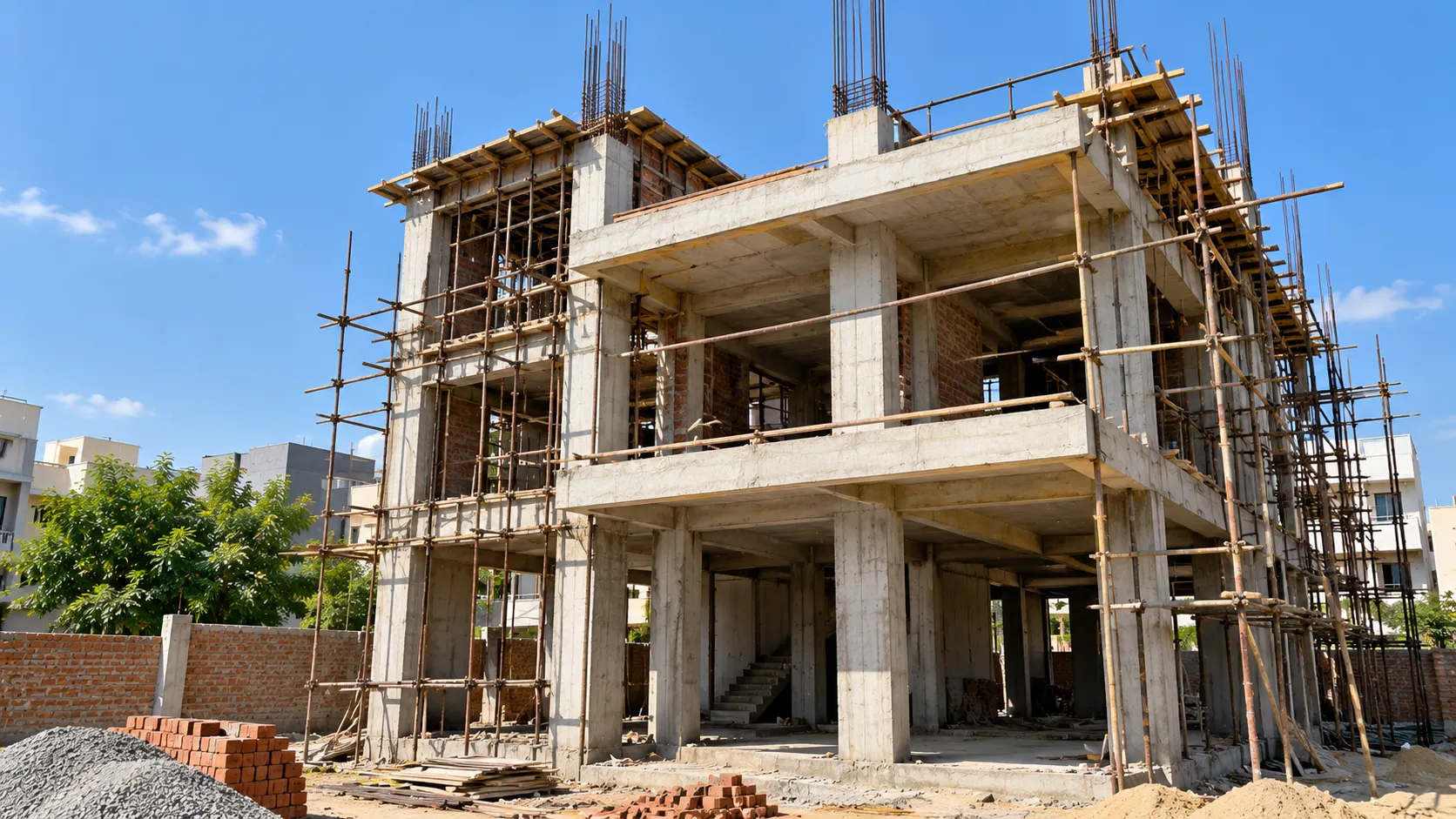
Illustrative 3D visualisation, not an architectural design.
A contingency is money held back for costs you cannot predict. Building always produces some: a design change, an unexpected soil condition, a price rise between quote and purchase.
How much?
There is no official figure. The GharBudget.in calculator defaults to 10% of base cost as a planning assumption, and lets you choose 0% to 50%. A reasonable approach:
- Lower end when the design is final, soil conditions are known and you have a fixed-price, itemised contract.
- Higher end for renovations, uncertain soil, a design still evolving, or when you plan to buy materials yourself.
An example
If your base cost is ₹20 lakh, a 10% contingency is ₹2 lakh, for a planning total of ₹22 lakh. Spend of the reserve is not automatic: if you do not need it, it stays yours.
Rules for using it
- Keep it in a separate account or mental bucket, not merged into the main budget.
- Use it for genuine unforeseen items, not for upgrades you decided you wanted.
- Get any extra work priced in writing before it starts.
- If more than half the reserve is gone before the structure is finished, review the remaining plan.
Contingency is not padding for the contractor’s quote; it is your own safety margin. See also hidden costs when building a house.